
How to Break In a Leather Jacket Without Damaging It
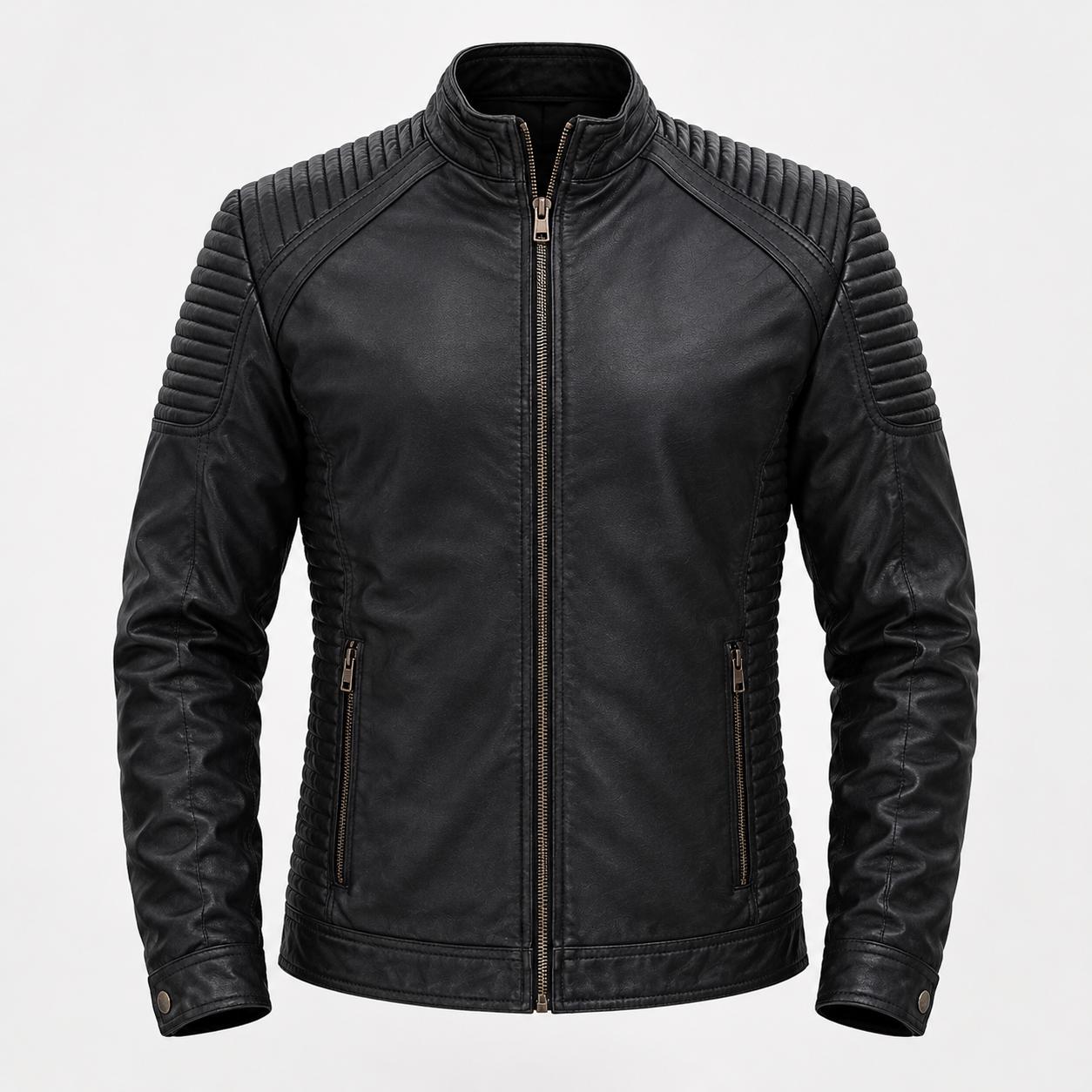
Quick answer: The best way to break in a leather jacket is simply to wear it, often and actively, for two to four weeks. Body heat and movement soften the hide and set creases where your body actually bends. Skip shortcuts like soaking it in water or throwing it in a dryer; they can stiffen, shrink or crack the leather.
If you are wondering how to break in a leather jacket you just bought, you are in good company. Almost every new jacket feels a little stiff on day one, especially at the elbows, shoulders and collar. That stiffness is not a flaw. It is a sign the hide still has its body and has not been pre-softened with chemicals that shorten its life. Below is what we have learned from cutting, stitching and finishing jackets in our Karachi workshop, and from watching how leather behaves once it leaves our bench.
Why a New Leather Jacket Feels Stiff
Leather is skin, and a jacket is built from several panels of it. When we cut a jacket, each panel is laid out so the grain runs in a sensible direction, then the panels are stitched, the seams are pressed flat, and the edges and zips are finished. At that point nothing has flexed yet. The fibers are still sitting in the flat position they were tanned and finished in.
A few things add to that first-day stiffness:
- Thickness of the hide. Heavier leathers used for moto and biker styles take longer to relax than thin lambskin.
- The finish. A protective top coat or a waxed surface feels firmer until it has been flexed for a while.
- Construction details. Quilted shoulders, double-layered collars, zip tracks and lined pockets are all extra layers that need time to move together.
- Fit. A jacket that fits close through the chest and arms will feel more snug at first, which is usually what you want long-term.
The good news is that leather is one of the few materials that gets more comfortable the more you use it.
How to Break In a Leather Jacket: The Step-by-Step Method
This is the routine we recommend to anyone who asks us how to break in a leather jacket without risking damage. It is slow by design, because slow protects the leather.
1. Check the fit before you start
Breaking in softens leather; it does not make a jacket a size bigger. If the shoulders are too narrow or you cannot cross your arms, no amount of wearing will fix that. Try it on over the layer you will usually wear underneath, reach forward as if holding a steering wheel, and lift your arms. If the fit is right but stiff, you are ready to break it in. Our guide on choosing a leather jacket by leather type and fit covers what a correct fit looks like.
2. Wear it indoors for short sessions
For the first few days, wear the jacket around the house for an hour or two at a time. Cook in it, sit at your desk in it, reach for things on high shelves. This gets the elbows moving while you are still inside the 14-day return window.
3. Move with purpose
Once you are happy with it, wear it out as much as you can. Walking, driving, carrying a bag and riding all create the bends that matter. Do some deliberate movements too: bend and straighten your arms, roll your shoulders, cross your arms across your chest. These are the exact places where creases will form, and you want them to form where your body bends, not at random.
4. Let body heat do the work
Warmth makes leather more supple. Wearing the jacket for a full day lets your body heat gently relax the fibers. This is far safer than an external heat source because it never gets hot enough to dry the leather out.
5. Condition lightly after a few weeks
After two or three weeks of regular wear, apply a thin coat of a leather conditioner suited to your jacket’s finish. Test it first on a hidden spot such as the inside of the hem facing. Work it in with a soft cloth, focusing on the elbows, collar and cuffs, then let it absorb overnight. One light coat is plenty. Over-conditioning can make leather feel greasy and attract dirt.
6. Store it on a proper hanger
Between wears, hang the jacket on a wide, shaped hanger so the shoulders keep their form. Avoid thin wire hangers, which leave dents, and never fold a jacket into a drawer for long periods.
Shortcuts Compared: What Works and What to Avoid
Fast methods are everywhere online. Here is how they compare from a workshop point of view.
| Method | Speed | Risk to leather | Our view |
|---|---|---|---|
| Regular wear | Slow (2–4 weeks) | Very low | The best method, and creases form naturally |
| Targeted flexing (rolling sleeves, bending elbows by hand) | Moderate | Low | Fine as a supplement to wearing it |
| Light conditioning | Moderate | Low if done sparingly | Useful after initial wear, not on day one |
| Wearing it in light rain, then air drying | Fast | Medium | Can cause water marks and uneven drying; not recommended |
| Soaking in a bathtub | Fast | High | Can shrink panels, warp seams and strip oils |
| Hair dryer or tumble dryer | Fast | High | Heat dries leather out and can crack the finish |
Breaking In Different Jacket Styles
Moto and biker jackets
Asymmetrical zips, snap lapels and belted waists add structure, so a moto jacket usually takes the longest to soften. Leave the lapels unsnapped and let them fall open naturally while you wear it. A style like our men’s black leather moto jacket with stand-up collar will relax first at the collar and cuffs, then through the quilted panels.
Quilted-shoulder jackets
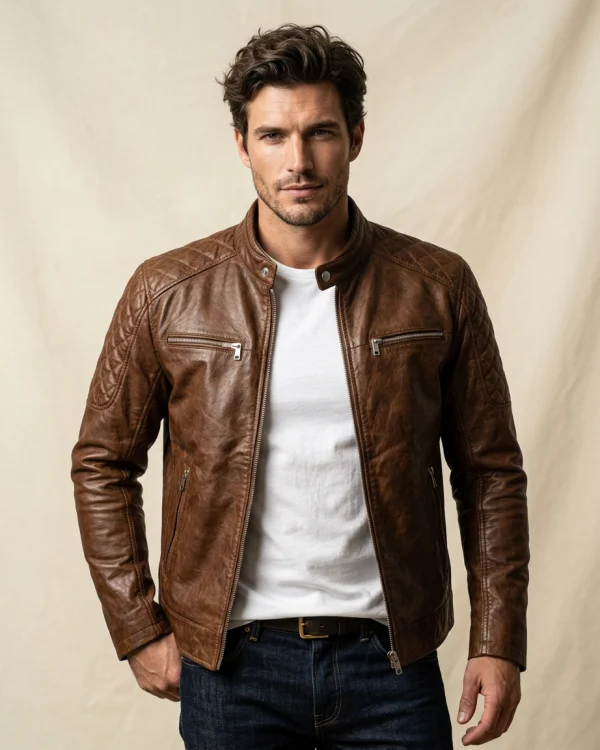
Quilting stitches a layer of padding behind the leather, so those areas move as one unit. Rolling your shoulders forward and back for a few minutes each time you wear it helps. The black biker jacket with quilted shoulders and the women’s asymmetrical moto jacket both benefit from this.
Distressed and vintage-style leather
Distressed finishes already have some surface character, and they tend to feel softer sooner. Creases on this kind of leather blend into the finish, which is part of the appeal. Jackets like the brown tactical jacket in vintage moto style look better with every month of wear.
Lighter brown and cognac jackets
Lighter colors show creases and patina more clearly, which is normal. Avoid oily conditioners that can darken the leather unevenly. The cognac brown quilted moto jacket is a good example of a color that develops richness over time.
You can browse all our men’s leather jackets to compare cuts and finishes.
Signs Your Jacket Is Broken In
Part of learning how to break in a leather jacket is knowing when you are done.
- You can reach forward and lift your arms without the jacket pulling across your back.
- Soft creases have formed at the inner elbows and the front of the shoulders.
- The collar lies flat or stands naturally without pressing into your neck.
- The jacket feels like it moves with you rather than around you.
Common Mistakes to Avoid
- Using heat to rush it. Radiators, dryers and heat guns pull moisture and oils out of the hide.
- Getting it soaked on purpose. Water itself is not the enemy, but saturating a jacket and drying it fast can tighten panels and leave marks.
- Over-conditioning. More product is not better. Once every few months is enough for most jackets.
- Storing it in plastic. Leather needs air; use a breathable cotton bag.
Frequently Asked Questions
How long does it take to break in a leather jacket?
With regular wear, most jackets feel noticeably softer in two to four weeks. Heavier hides and heavily structured moto styles can take a couple of months to feel fully worn in.
Will my leather jacket stretch as I break it in?
It will relax slightly, mostly at the elbows and shoulders, but it will not grow a full size. Choose a fit that is snug but allows full arm movement from day one.
Should I condition a brand-new leather jacket?
Usually not right away. A new jacket already has its finish and oils. Wear it for a few weeks first, then apply a thin coat of conditioner tested on a hidden area.
Can I wear my new leather jacket in the rain?
Light rain is fine. Blot it with a soft towel, hang it on a wide hanger and let it dry naturally at room temperature, away from heaters. Avoid heavy downpours while it is new.
Every jacket from our workshop is made to order and shipped worldwide with tracking, with free shipping on orders from $170. If you are ready for a jacket that becomes truly yours with wear, explore our leather jacket collection and pick the style you want to break in.

1 comment