How to Choose a Leather Jacket: Leather Types, Fit and Care Guide
Wondering how to choose a leather jacket that lasts? A real leather jacket is one of the few things in your wardrobe that gets better every year you wear it. Buy the right one and it will soften, mould to your shoulders and pick up a character no new jacket can copy. Buy the wrong one and it will sit in the closet, too stiff, too tight or simply not you. This guide walks you through everything that matters when choosing a leather jacket: the leather itself, the styles, how it should fit, and how to care for it so it lasts for decades.
Table of Contents
1. Start With the Leather: Grades Explained
The word “leather” on a label can mean very different things. Knowing the leather grades is the fastest way to tell a jacket that lasts from one that peels.
- Full-grain leather keeps the entire outer layer of the hide, including its natural grain. It is the strongest and most breathable leather and develops the richest patina over time.
- Top-grain leather has the very top surface lightly sanded to remove marks. It is smooth, slightly more uniform and still very durable.
- Genuine leather is real leather taken from lower layers of the hide. It is more affordable, but quality varies a lot between makers.
- Bonded or “PU” leather is made from leather scraps or plastic coatings. It looks good for a season, then cracks and flakes. Avoid it if you want a jacket for years.
Which hide is best: cowhide, lambskin or goatskin?
Cowhide is thick, rugged and protective, the classic choice for biker and moto jackets. Lambskin is buttery soft and lightweight, ideal for a slim, dressy fit but less resistant to scuffs. Goatskin sits in between: soft yet tough, with a pebbled grain. Sheepskin with shearling is the warmest option for cold winters.
2. How to Choose a Leather Jacket Style
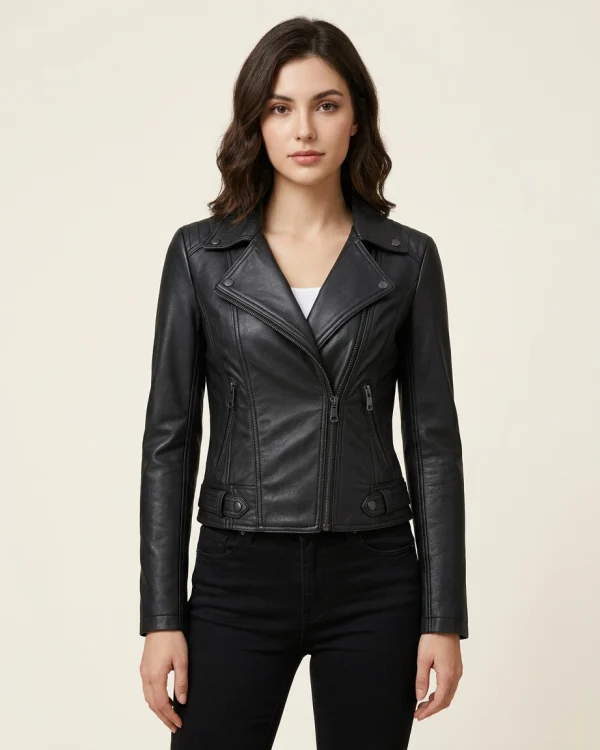
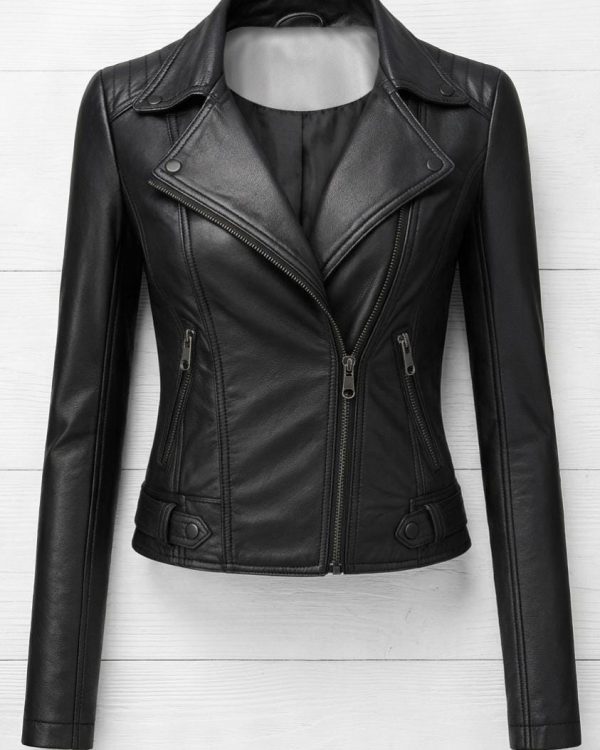
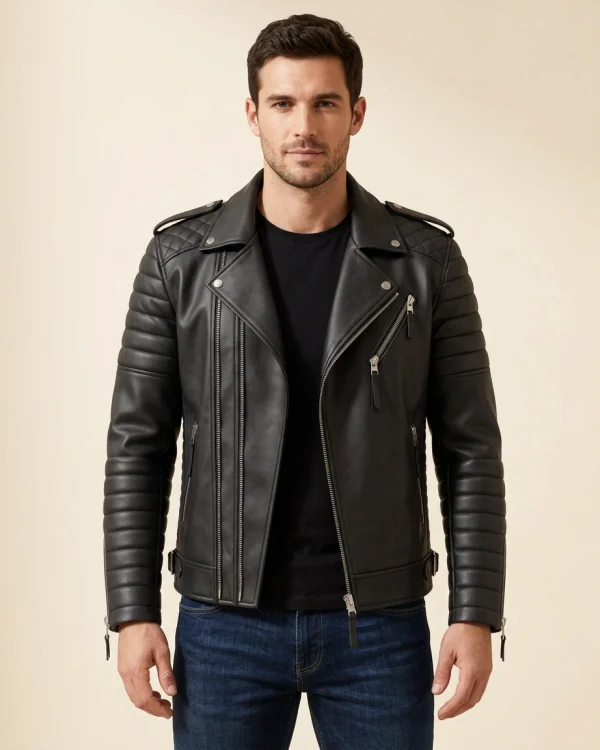
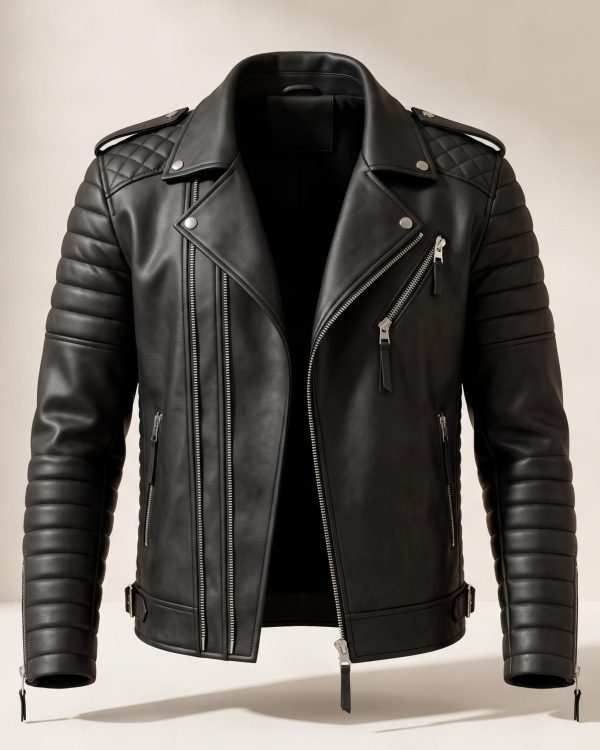
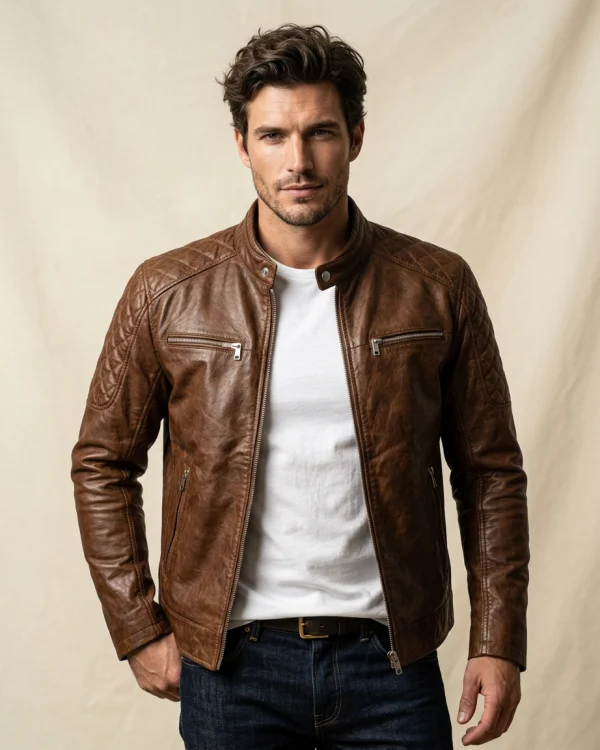
- Biker (moto) jacket: asymmetrical zip, wide lapels, zip cuffs and often quilted shoulders. Bold, timeless and works with jeans, tees and boots.
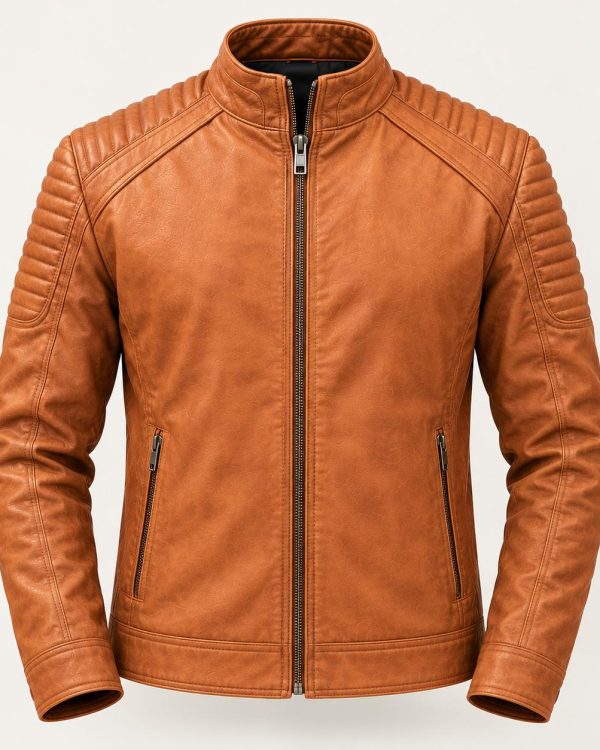
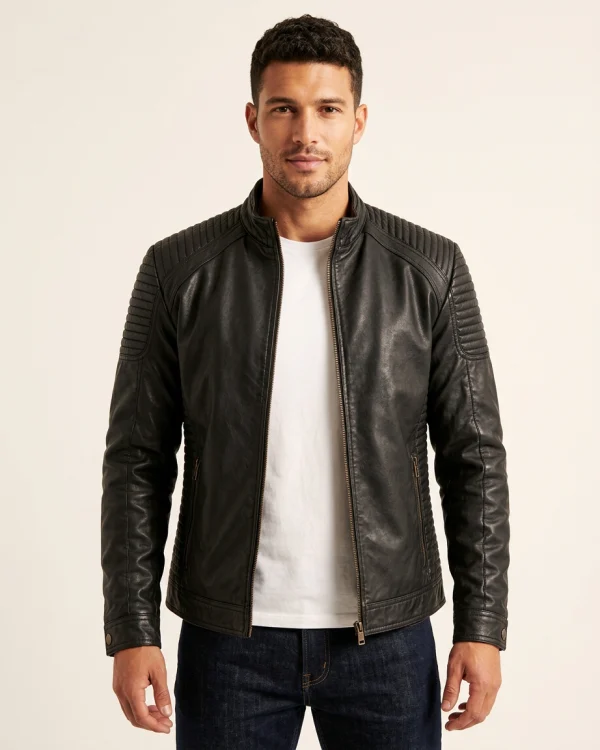
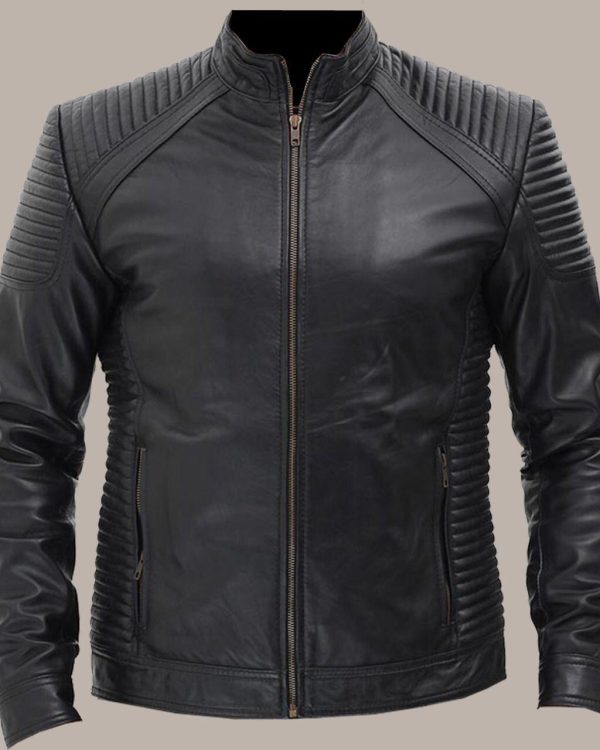
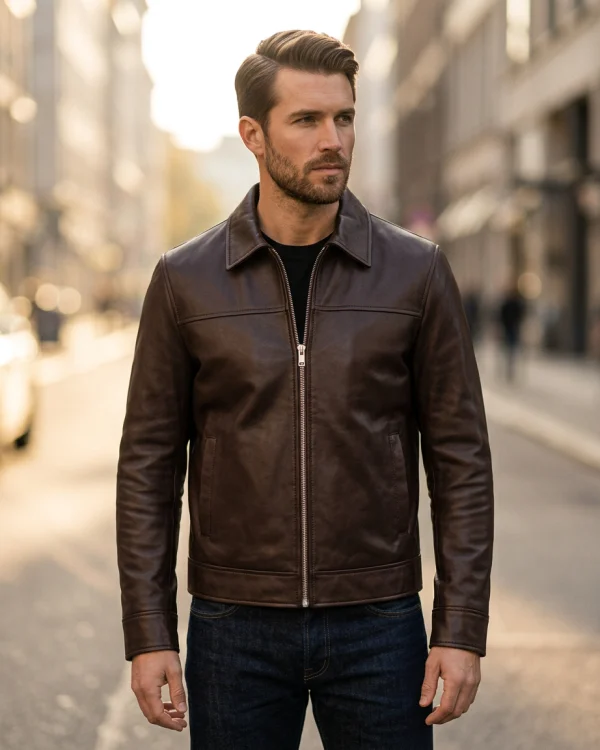
- Café racer: minimal, with a short stand-up collar and a straight front zip. Clean and modern, easy to dress up.
- Bomber: ribbed cuffs and waistband for a relaxed, sporty look.
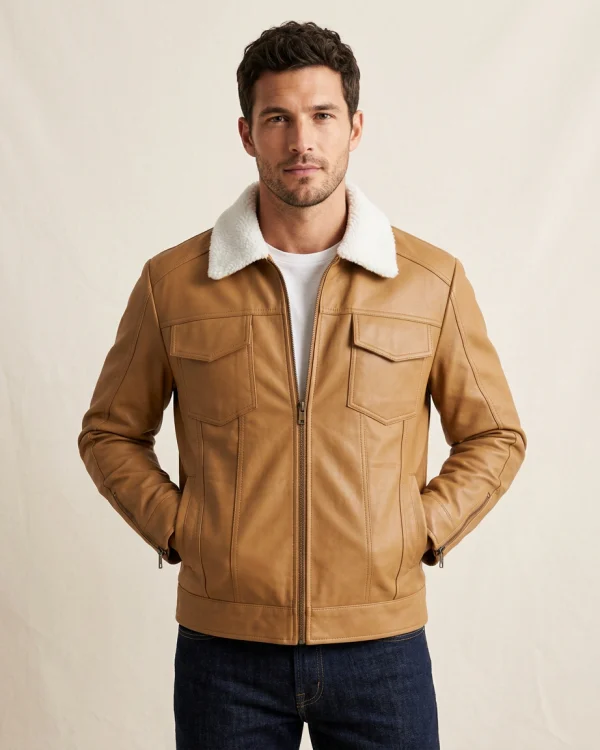
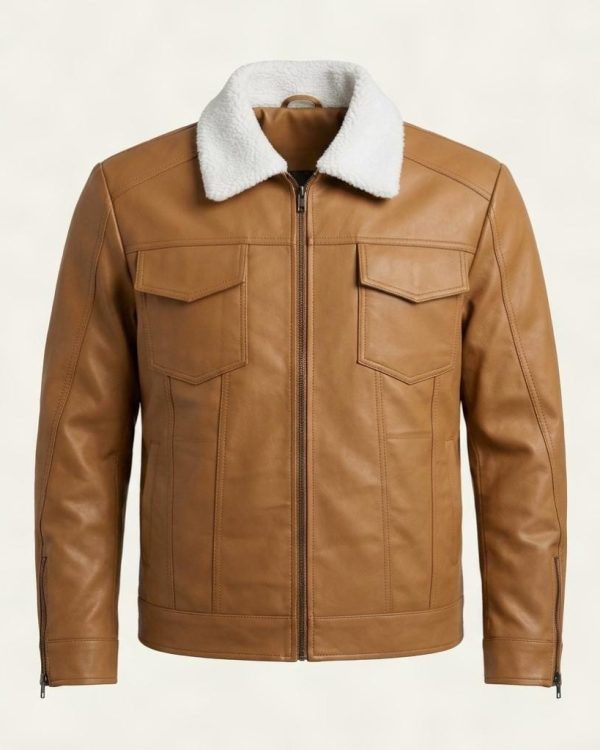
- Shearling or fur-collar jacket: a warm lining and collar for real winter weather.
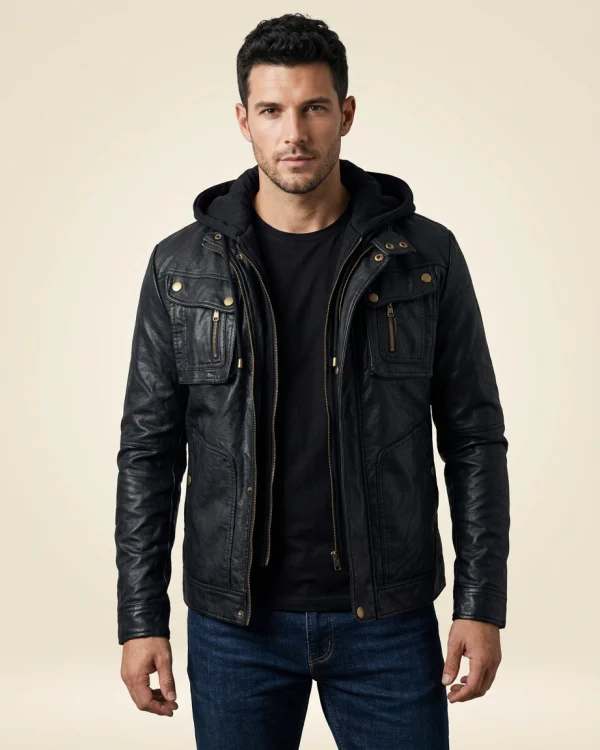
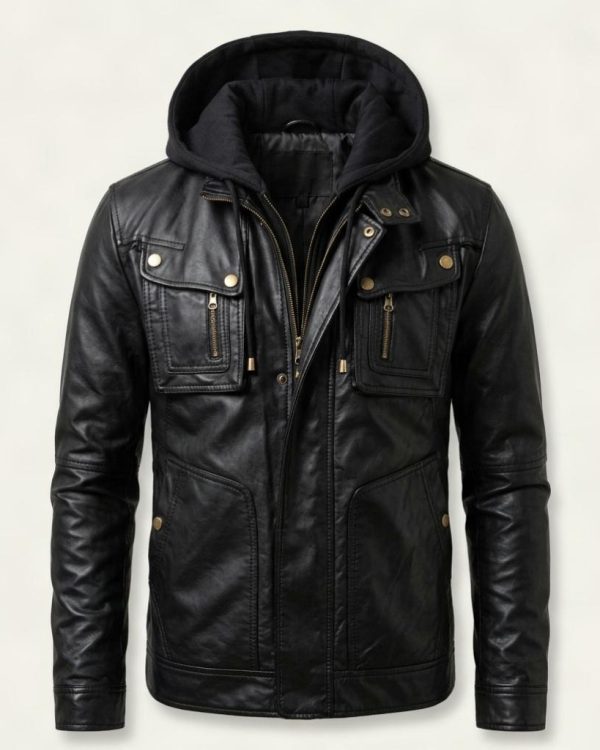
- Hooded leather jacket: a removable hood adds a casual, layered feel.
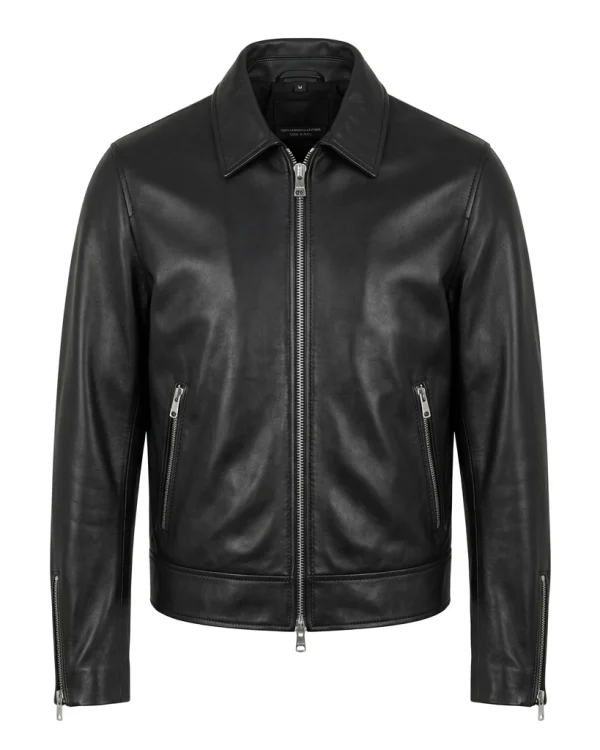
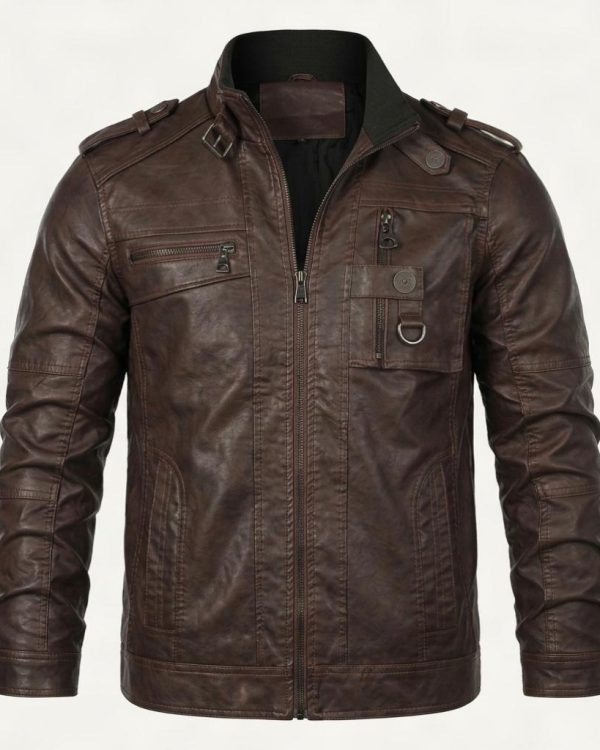
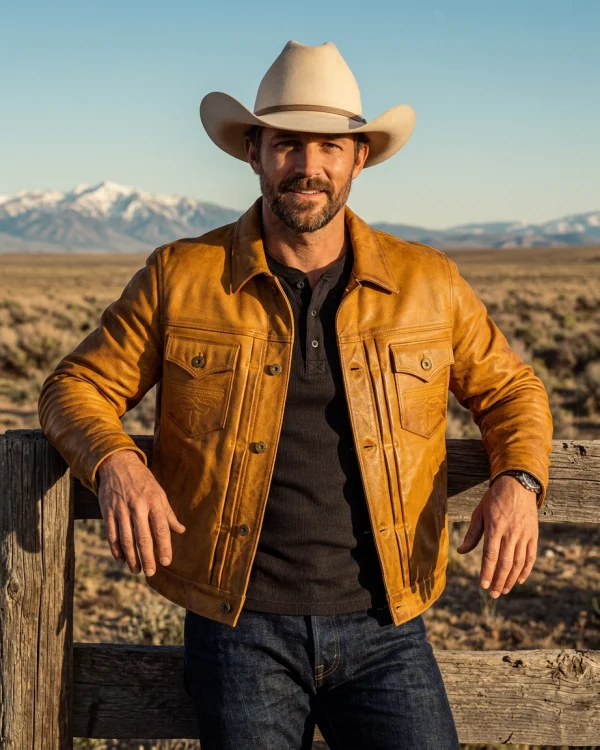
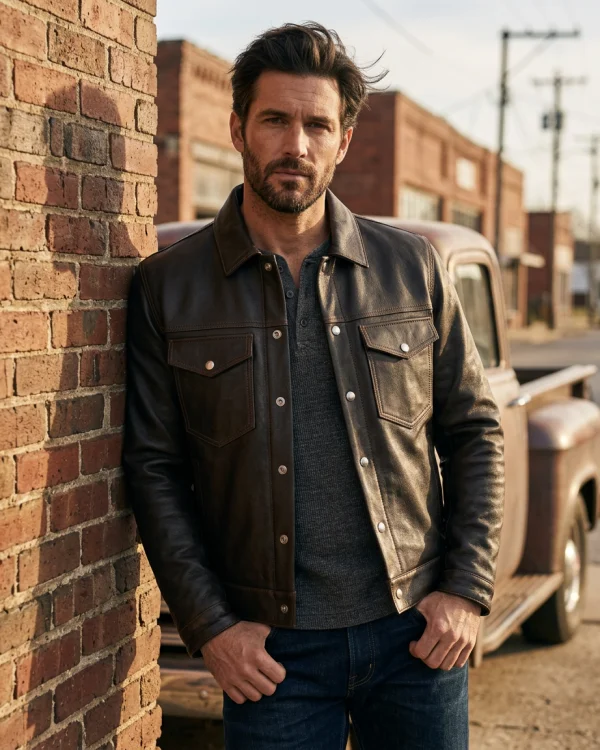
- Shirt-collar or trucker jacket: a classic collar and front zip or buttons, easy to wear every day.
If this is your first leather jacket, a black or dark brown biker or café racer is the most versatile choice. It works with almost everything and never goes out of style.
3. How Should a Leather Jacket Fit?
Fit is where most people go wrong. Leather stretches a little with wear but it never shrinks, so a jacket should feel snug, not loose, on day one.
- Shoulders: the seam should sit right at the edge of your shoulder bone. This is the one thing a tailor cannot easily fix.
- Chest: you should be able to zip it over a T-shirt or light sweater without the zip pulling.
- Sleeves: they should end around the base of your thumb with arms relaxed, and not ride up past your wrist when you reach forward.
- Length: a biker jacket should finish at or just below your belt. Longer styles look better on taller frames.
- Movement: cross your arms and lift them. A little tension across the back is normal; tightness that stops you moving is not.
Tip: measure your favourite jacket lying flat (armpit to armpit, shoulder to shoulder, sleeve length and back length) and compare it with the size chart before you buy. Between two sizes? Pick the larger if you plan to layer a hoodie or sweater underneath.
4. Details That Show Real Quality
- Stitching: small, even, tight stitches with no loose threads.
- Hardware: heavy metal zips that run smoothly. Cheap zips are the first part to fail.
- Lining: a quilted or satin lining makes the jacket warmer and easier to slip on.
- Smell and feel: real leather smells rich and earthy and has small natural variations in the grain. Plastic leather smells chemical and looks perfectly uniform.
- Edges and seams: clean, finished edges with no glue showing.
5. Black, Brown or Tan: Which Color Should You Pick?
Black is the classic: sharp, edgy and easy to match. Dark brown and espresso feel warmer and more vintage and pair beautifully with denim and earth tones. Cognac and tan make a statement and show off the leather’s natural patina the most. If you can only own one, start with black; if you already have black, brown is the best second jacket.
6. How to Care for a Leather Jacket
- Hang it on a wide, padded hanger so the shoulders keep their shape. Never fold it for long periods.
- Let it breathe. Store it in a cool, dry place in a cloth garment bag, never plastic.
- Wipe off dirt with a soft, slightly damp cloth.
- Condition it 2 to 3 times a year with a quality leather conditioner to keep it supple and stop cracking.
- If it gets wet, let it air-dry at room temperature, away from heaters and direct sun, then condition it.
- Never put it in a washing machine or tumble dryer. For deep stains, use a leather specialist cleaner.
7. Is a Real Leather Jacket Worth the Price?
Yes, if you choose well. A quality leather jacket can be worn for 10 to 20 years, while a cheap faux jacket often lasts one or two seasons. Divide the price by the years you will wear it and real leather is usually the better value. It also looks better with age, which is something no synthetic material can claim.
How to Choose a Leather Jacket: FAQs
Should a leather jacket be tight or loose?
Snug but comfortable. It should close over a T-shirt or thin sweater without pulling, because leather relaxes slightly as you wear it.
How can I tell if a jacket is real leather?
Look for small natural variations in the grain, a rich earthy smell and rough, fibrous edges on cut seams. Faux leather looks perfectly even and smells of plastic.
Can I wear a leather jacket in the rain?
Light rain is fine. Wipe off the water and let the jacket dry naturally at room temperature, then apply conditioner. Avoid heavy downpours where possible.
How long does a real leather jacket last?
With basic care, a well-made leather jacket can last 10 to 20 years or more, and it gets softer and better looking along the way.
Shop Handcrafted Leather Jackets at Kuickshop
Now that you know how to choose a leather jacket, find yours. Every Kuickshop jacket is handcrafted from genuine leather by skilled artisans in Pakistan, in sizes from XS to 4XL. Browse all men’s leather jackets or see every jacket.
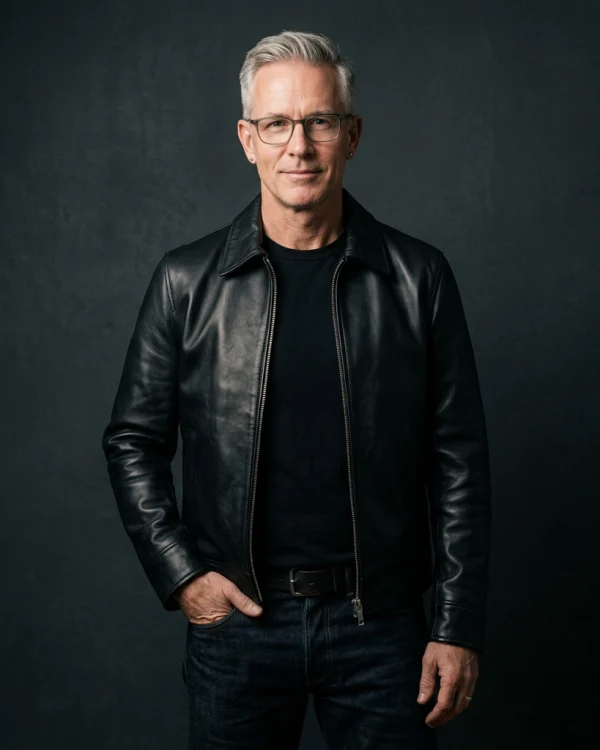
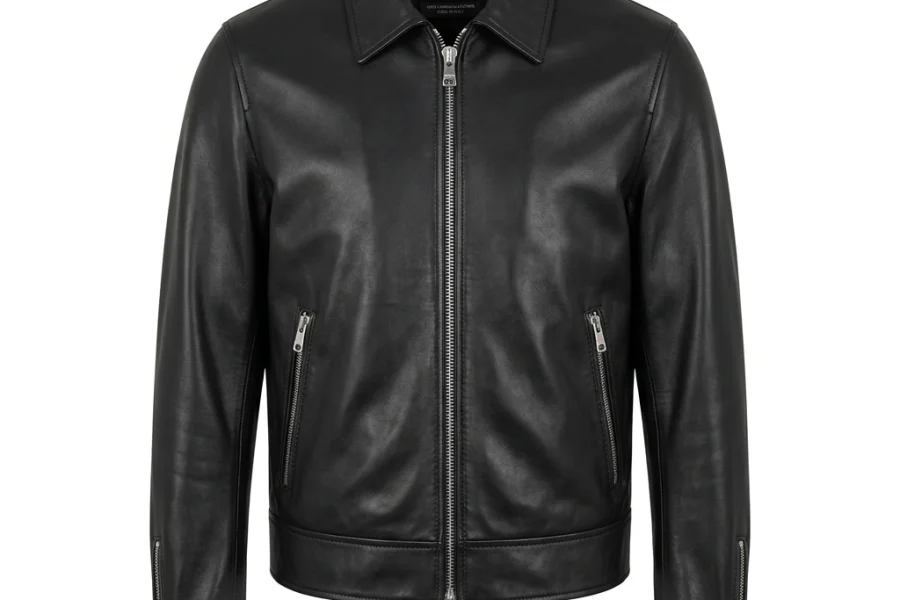
Want the look made famous by NVIDIA’s CEO? Our Jensen Huang leather jacket comes in genuine black lambskin with a sharp shirt collar.
-
Men's Leather Jackets
Men’s Black Lambskin Leather Jacket with Shirt Collar and Full Front Zip
- Black
- Brown
-
Men's Leather Jackets
Men’s Tan Leather Jacket with White Faux Shearling Collar
Extra 50% off with code -
-
-
-
Men's Leather Jackets
Men’s Black Leather Moto Jacket with Stand-Up Collar
- Black
- Brown
-
-