
How to Tell if Leather Is Real: 7 Simple Tests Anyone Can Do
Knowing how to tell if leather is real can save you money, disappointment and a closet full of jackets that peel after one winter. The good news is that you don’t need a lab. A few minutes with your nose, your fingertips and a careful eye will tell you most of what you need to know, whether you’re in a store or unboxing a new bag at home.
In this guide
- How to Tell if Leather Is Real: 7 At-Home Tests
- Real Leather vs. Fake Leather at a Glance
- The Water and Burn Tests: Use With Caution
- Reading Labels: Genuine, Top-Grain, Full-Grain and Bonded
- Does Price Tell You Anything?
- Real Leather FAQs
- Shop Real Leather Bags and Jackets
How to Tell if Leather Is Real: 7 At-Home Tests
Real leather is animal hide that has been tanned, so it behaves like skin: it has pores, fibers and small irregularities. Artificial leather, often sold as PU leather, faux leather or leatherette, is usually a plastic coating on a fabric backing. Once you understand that difference, learning how to tell if leather is real becomes much easier, and each test below makes sense.
1. Smell It
Genuine leather has a rich, slightly earthy smell that is hard to fake. Synthetic materials tend to smell like plastic or chemicals, especially when new. Be aware that heavy dyes and finishes can mute the natural scent, so treat smell as a strong clue rather than final proof.
2. Touch It and Notice the Temperature
Run your hand across the surface. Real leather feels supple and slightly uneven, and it warms up as you hold it. Faux leather often feels very smooth, cool and uniform, almost slick, and stays that way no matter how long you touch it.
3. Look Closely at the Pores and Grain
Hold the item under good light. Real leather shows pores scattered in an irregular pattern, along with tiny creases, scars or variations in texture. Fake leather is embossed with a repeating pattern, so the “pores” look too even and the texture repeats across the panel.
4. Check the Edges
Edges are one of the most reliable giveaways. Cut edges of real leather look fibrous and slightly rough, or they are burnished or painted smooth by the maker. Synthetic leather edges often show a perfectly even line of plastic over a woven or knitted fabric layer.
5. Turn It Over
If you can see the back of the material, look for a suede-like, fuzzy underside. That fibrous texture is the inside of the hide. A woven fabric or mesh backing usually means you are looking at a synthetic. Lined jackets and bags can hide this, so check inside pockets or seams.
6. Press and Bend It
Press your thumb into the surface. Real leather wrinkles softly around your finger and may darken slightly where it stretches, then relaxes back. Faux leather tends to dimple uniformly and spring back like rubber. Bending a corner works the same way: real leather creases naturally, while plastic coatings can look stiff or show fine cracks.
7. Feel the Weight and Thickness
For its size, real leather usually feels denser and more substantial than a synthetic. This varies with the type of hide and thickness, so compare similar items when you can. A jacket that feels surprisingly light and flimsy deserves a closer look.
Real Leather vs. Fake Leather at a Glance
If you only have a minute, this quick checklist sums up how to tell if leather is real.
- Smell: earthy and natural vs. plastic or chemical.
- Surface: irregular pores and small marks vs. a perfectly repeating pattern.
- Edges: fibrous or burnished vs. a clean plastic layer over fabric.
- Back side: fuzzy, suede-like fibers vs. woven fabric.
- Touch: warms to your hand vs. stays cool and slick.
- Aging: develops a patina and softens vs. peels, flakes or cracks.
No single test is perfect when you’re working out how to tell if leather is real, but when four or five point the same way, you can be confident.
The Water and Burn Tests: Use With Caution
You’ll often read that real leather absorbs a drop of water while fake leather lets it bead up. Sometimes that is true, but many genuine leathers are finished or sealed, so water beads on them too. Uncoated aniline leather, on the other hand, can be left with a mark. If you try it, use a single drop on a hidden spot and blot it right away.
The burn test is even riskier. Burnt leather smells like singed hair while plastic melts and smells acrid, but this test damages the item, is a fire hazard, and is never appropriate in a store. Skip it unless you have a scrap you don’t mind destroying.
Reading Labels: Genuine, Top-Grain, Full-Grain and Bonded
Labels help, but only if you know the vocabulary. Here is what the common terms usually mean.
- Full-grain leather keeps the entire top layer of the hide, natural marks and all. It is the most durable grade and ages beautifully.
- Top-grain leather has the surface lightly sanded and finished for a more uniform look. Still real, still durable.
- Genuine leather is real leather, but the term is often used for lower layers of the hide, so quality varies widely.
- Bonded leather is made from leather scraps mixed with a binder. It contains some leather but performs more like a synthetic.
- PU leather, vegan leather and leatherette contain no animal hide at all.
When a listing simply says “leather-look” or avoids naming the material, assume it is synthetic until the seller tells you otherwise. If you’re shopping for outerwear, our guide on how to choose a leather jacket covers grades, fit and styles in more depth.
Does Price Tell You Anything?
When it comes to how to tell if leather is real, price is a useful warning sign, not a guarantee. A full leather jacket or large tote takes a lot of hide and hours of skilled cutting and stitching, so a price that seems far too low for the size of the item is a red flag. At the same time, a high price alone doesn’t prove anything; some expensive fashion pieces use coated or bonded materials.
The better approach is to combine price with the physical tests above and with clear information from the seller: the type of hide, the grade and how the item is made. A trustworthy maker will happily answer those questions.
Real Leather FAQs
How to Tell if Leather Is Real When You’re Shopping Online
Zoom in on product photos for pore patterns, edges and stitching, and read the material description carefully. Look for the type of hide and the grade, not just the word “leather.” If anything is vague, message the seller before you buy, and run the at-home tests as soon as the item arrives.
Is “genuine leather” real leather?
Yes. Genuine leather is real animal hide, though it is often a lower layer of the hide than top-grain or full-grain leather. It can still be a good choice; just expect quality to vary between makers.
Does real leather crack?
Real leather can dry out and crack if it is neglected, but it rarely peels. Peeling or flaking in thin sheets is a classic sign of a synthetic or bonded material. A little conditioning every few months keeps real leather supple.
Can real leather be waterproof?
Many real leathers are treated to resist water, which is why the water test can mislead you. Resistant is not the same as waterproof, though, so let wet leather air-dry away from direct heat.
Shop Real Leather Bags and Jackets
Now that you know how to tell if leather is real, put your new skills to work. Every piece at Kuickshop is handcrafted from genuine leather in Pakistan, so you can smell it, feel it and watch it age the way real leather should. Browse our handcrafted leather bags and leather jackets, or start with a few favorites below.
-
Men's Leather Jackets
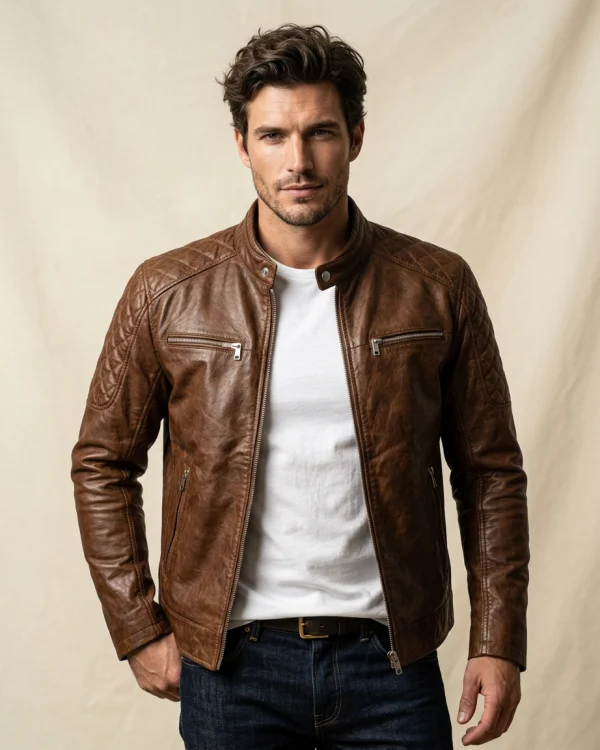
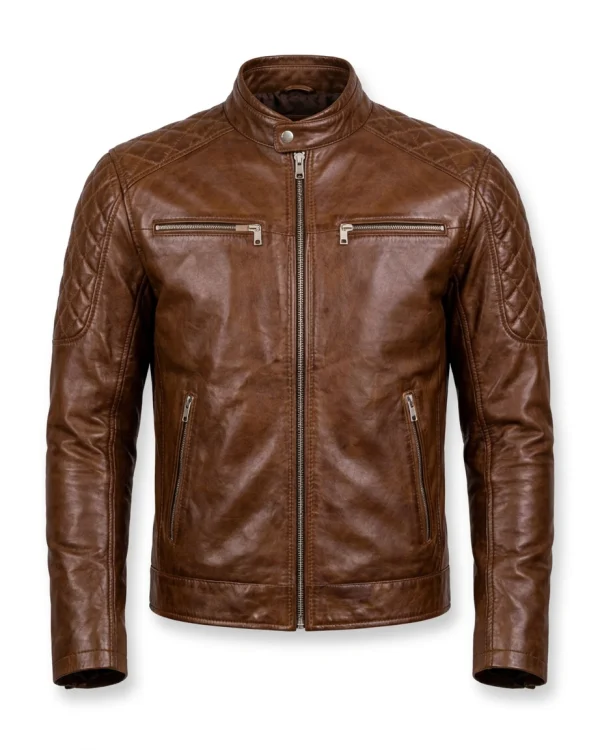
Brown Leather Cafe Racer Jacket with Quilted Shoulders
- Black
- Brown
-
Men's Leather Jackets
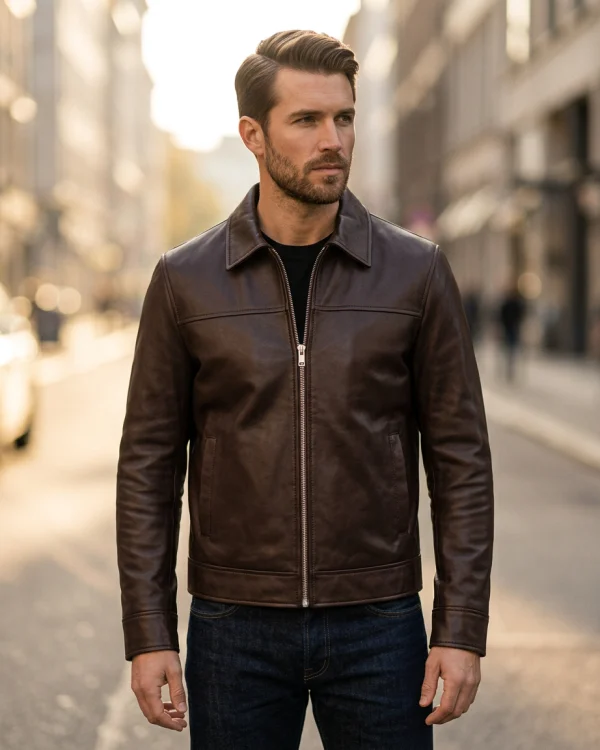
Dark Brown Leather Shirt Collar Jacket with Full Front Zip
- Black
- Dark Brown
-
Men's Leather Jackets
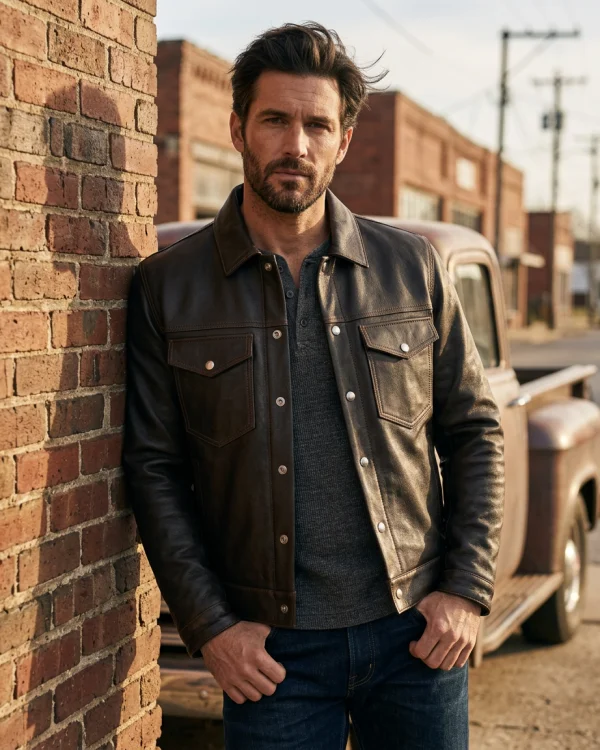
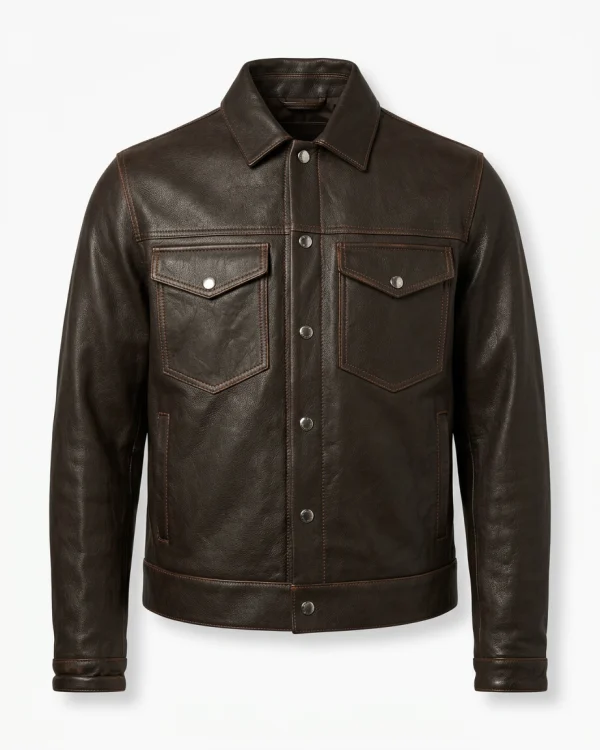
Dark Brown Leather Trucker Jacket with Snap Chest Pockets
- Black
- Dark Brown
-
Men's Leather Jackets
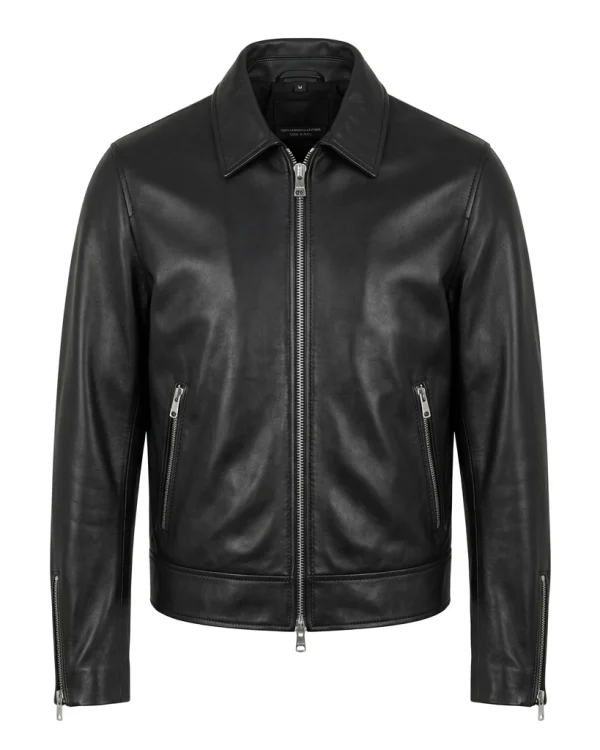
Men’s Black Lambskin Leather Jacket with Shirt Collar and Full Front Zip
- Black
- Brown


2 comments