

Card Holder vs Wallet: Which Should You Carry?
Quick answer: In the card holder vs wallet choice, carry a card holder if you use fewer than six cards, rarely carry cash and want a slim front-pocket option. Carry a wallet if you regularly need bills, receipts, coins or more than six cards. Many people end up using both: a card holder for daily errands and a wallet for travel or longer days.
In our workshop we make both, and the difference between them starts at the cutting table. A card holder might be just two or three pieces of leather; a bifold wallet can be eight or more, each one adding a layer of thickness. That simple fact explains most of the card holder vs wallet debate: every extra layer adds function and adds bulk.
Here’s how to decide which one fits the way you actually live.
Card Holder vs Wallet: The Core Differences
A card holder is a flat sleeve with a few card slots, usually two to four, plus a center pocket. It’s designed for cards first, with folded cash as an afterthought.
A wallet (bifold, trifold, long or zip-around) is designed around a full-length bill compartment, with multiple card slots and sometimes a coin pocket, ID window or zip section.
| Feature | Card holder | Bifold wallet |
|---|---|---|
| Typical card capacity | 3 to 8 cards | 6 to 12 cards |
| Cash | Folded bills only | Flat bills in a full-length pocket |
| Coins | Rarely | Some models have a coin pocket |
| Front pocket, jacket, small bag | Back or front pocket, bag | |
| Thickness when loaded | Very slim | Medium |
| Best for | Phone-pay users, minimalists | Cash users, travelers, receipt keepers |
When a Card Holder Makes More Sense
If your phone handles most payments, a card holder removes the bulk you don’t need. Common signs you’re a card-holder person:
- You carry an ID, one or two bank cards and a transit or gym card.
- You rarely carry cash, or only a couple of folded bills.
- You like a front-pocket carry, or you sit a lot and a back-pocket wallet bothers you.
- You switch between bags often and want something that fits anywhere.
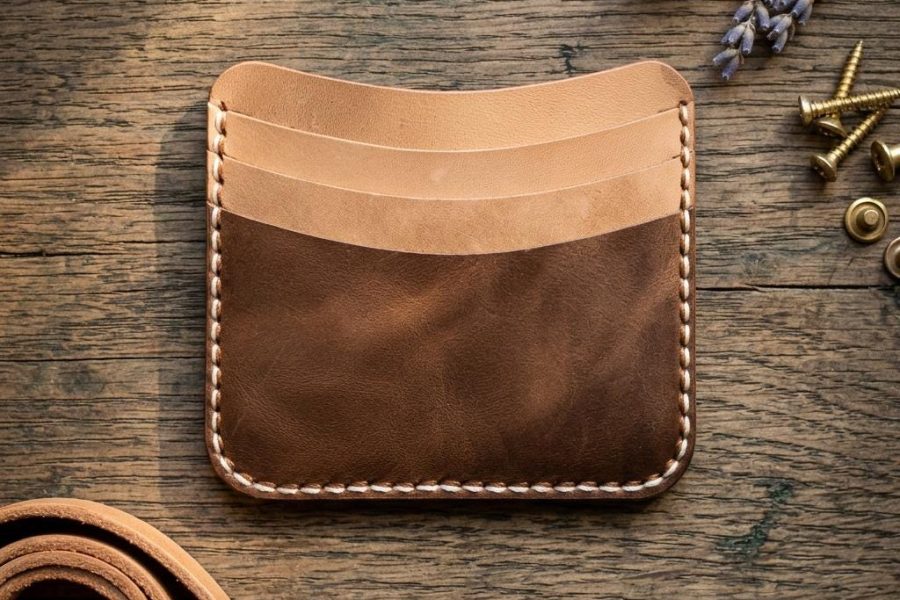
Good examples include a minimalist leather card holder in brown or black, which keeps things simple, or a brown leather card holder with three stepped pockets, where each slot sits a little lower than the one in front, so you can see and grab the right card without fanning them all out.
For the slimmest possible carry, a dark brown crazy horse leather card sleeve holds a few essential cards and almost disappears in a pocket.
Card holder downsides to be honest about
- Bills have to be folded, sometimes twice.
- Receipts and coins have nowhere to go.
- Overstuffing stretches the slots permanently, so you have to stay disciplined.
When a Wallet Is the Better Choice
A wallet earns its extra thickness when you genuinely use what it holds. You’re likely a wallet person if:
- You use cash regularly for tips, markets, parking or small shops.
- You carry more than six cards, including loyalty, insurance or work cards.
- You travel and need to hold two currencies, boarding passes or receipts for expenses.
- You prefer bills flat rather than folded.
The full-grain leather bifold wallet in tan, red or navy is a classic everyday option. If you want a wallet that still stays fairly slim, the tan leather minimalist bifold wallet with quick-access slots is a middle ground: a bill section like a wallet, with outer slots for the cards you grab most.
Bulk: Where the Thickness Really Comes From
From the workbench, thickness comes from three sources:
- Leather layers. Each card slot is usually a separate piece of leather. More slots, more layers.
- Leather weight. Thicker hides feel sturdier but add up fast. Well-made slim pieces use thinner leather for interior slots and keep the sturdier leather for the outer shell.
- What you put in it. Honestly, this is the biggest factor. A slim wallet stuffed with old receipts is thicker than a well-organized bifold.
Some designs reduce layers with clever cutting. Stitchless or origami-fold wallets are cut from fewer pieces and folded into shape, which cuts down on seams. Whatever you choose, empty it out once a month.
Durability: Which Lasts Longer?
Both can last for years if they’re made well. On any wallet or card holder, the parts that wear first are the edges and the stitching at the mouth of the card slots, because that’s where cards rub every day. That’s why we burnish and seal edges after stitching and keep stitch tension tight at those stress points.
Card holders sometimes outlast wallets simply because they have fewer seams and aren’t sat on in a back pocket. A wallet carried in a back pocket flexes every time you sit, which stresses the spine fold over time.
Security and Practical Concerns
- Losing it: A smaller card holder is easier to misplace. Some people keep it in the same pocket every day to build the habit.
- Front-pocket carry: Card holders sit comfortably in a front pocket, which is harder to pickpocket than a back pocket.
- Card wear: Snug leather slots protect cards from scratches better than loose pockets or a phone case.
- Contactless cards: Some people tap a card holder against a payment reader without taking a card out. This only works reliably when one contactless card sits on the outside, because two cards stacked together can confuse the reader.
- Phone cases: Folio phone cases with card slots are another option, but carrying everything in one item means losing your phone also means losing your cards. A separate card holder spreads the risk.
Can You Carry Both?
Yes, and plenty of people do. The card holder vs wallet question doesn’t have to be either-or. A common setup is a card holder for daily life (work, coffee, the gym) and a wallet for travel, weekends or days when you know you’ll need cash. Leather from the same color family, such as two shades of brown, makes them look like a coordinated set.
Browse our full range of leather wallets and card holders to compare sizes side by side. If you’re buying one as a present, our leather gifts for men guide has more ideas.
Frequently Asked Questions
Card holder vs wallet: which is better for men?
It depends on what you carry, not on gender. If you use six or fewer cards and pay mostly by phone, a card holder is better. If you carry cash, receipts or many cards, a bifold wallet is more practical.
How many cards should a card holder hold?
Most are comfortable with four to eight cards. Going beyond what it’s designed for stretches the slots, and they won’t tighten back up.
Can you keep cash in a card holder?
Yes, folded bills fit in the center pocket of most card holders. It works well for a few bills but becomes bulky if you carry a lot of cash.
Will a new leather card holder loosen up?
Yes, a little. Slots that feel tight at first relax slightly as the leather molds to your cards, which is why a snug fit on day one is a good sign.
Ready to slim down your everyday carry, or upgrade to a wallet that holds everything? Explore our handmade card holders and wallets, made to order in our workshop and shipped worldwide with tracking.

Comments